Coordination of benefits

Every patient’s plans, found before care.
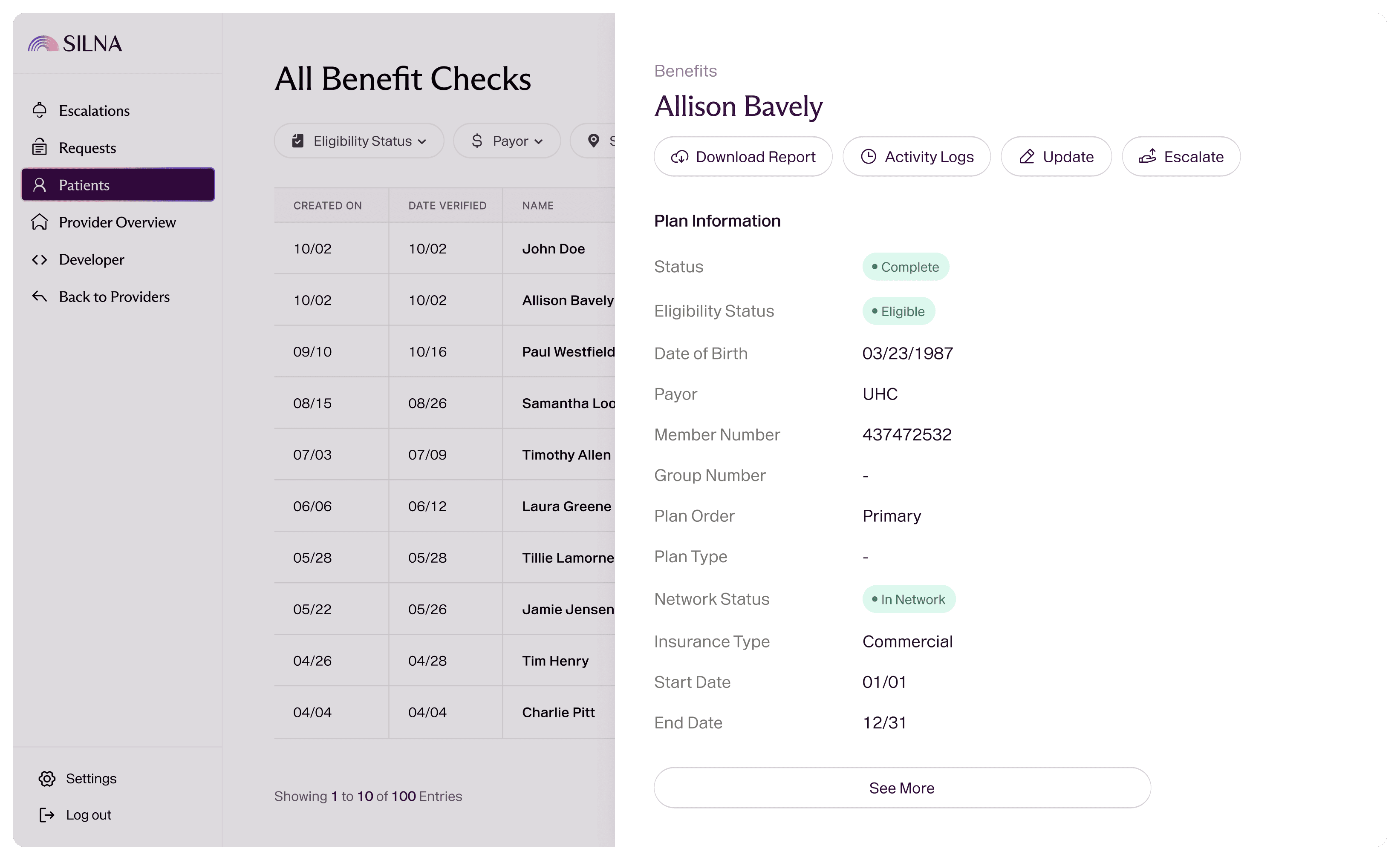
Silna finds patients’ additional plans before the first visit and keeps checking coverage through treatment, so coordination of benefits can start with the right plan.
Get started
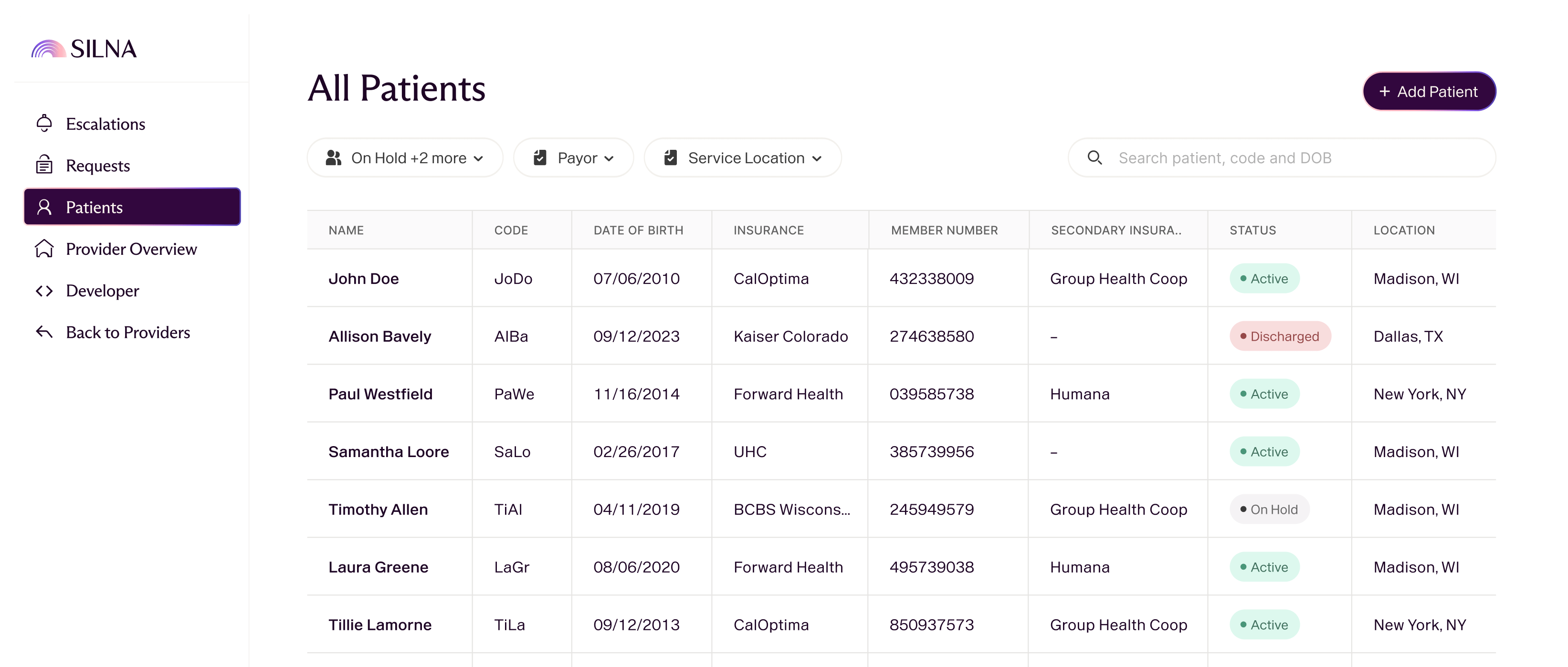
Silna patient record showing each patient’s plans
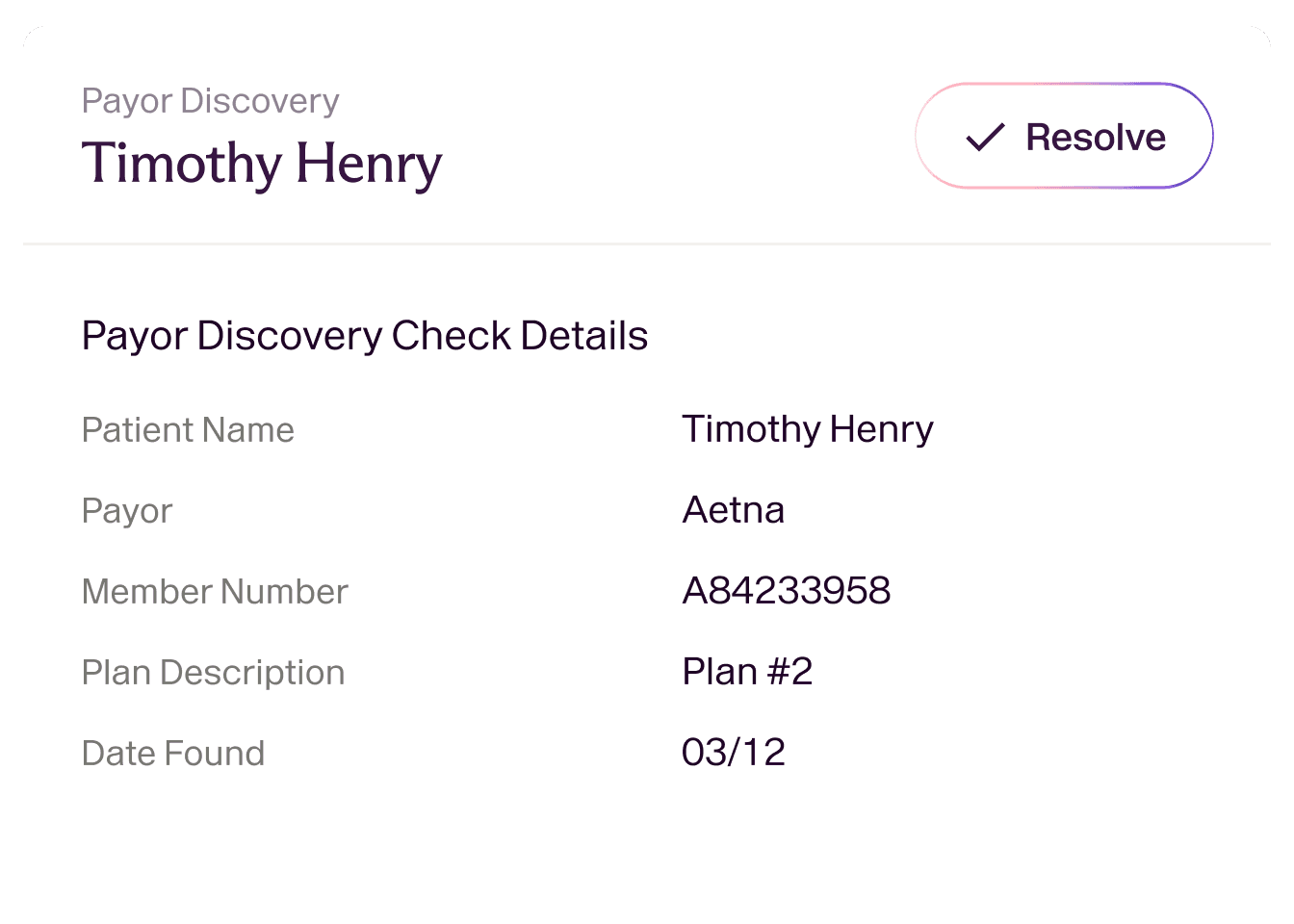
Payor discovery: an additional plan found for a patient
Find additional plans first
Each benefit check runs before the patient’s first appointment and confirms the coverage on file, including any additional insurance.
Patient list with each patient’s additional insurance
Catch plan changes
Insurance monitoring regularly checks that each patient’s plan is still active, flags lost coverage, and detects additional insurance and mid-treatment coverage changes automatically.
Monthly eligibility checks
Re-check every month
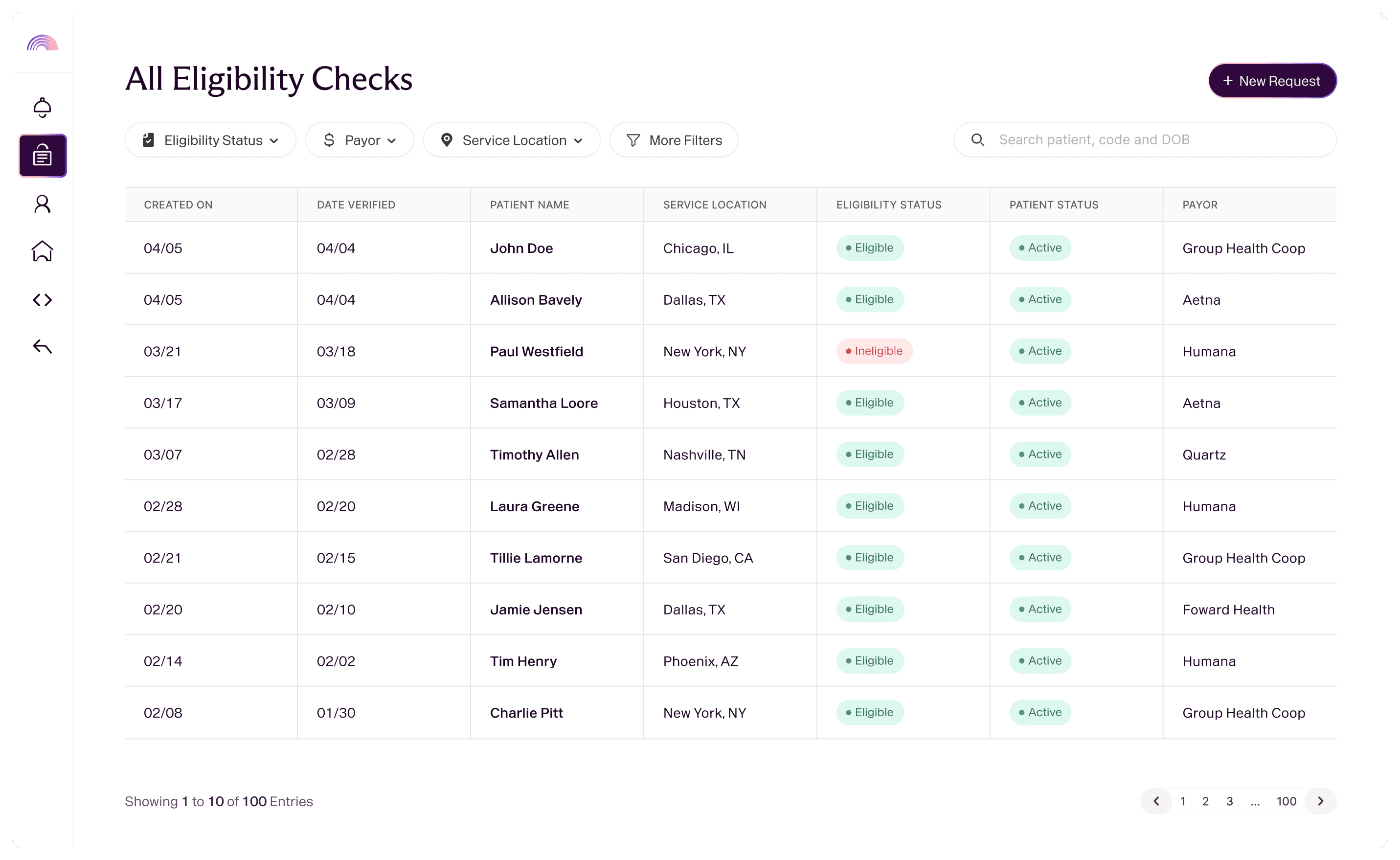
Eligibility is re-verified every month, and monitoring flags a lost plan or a newly added one.
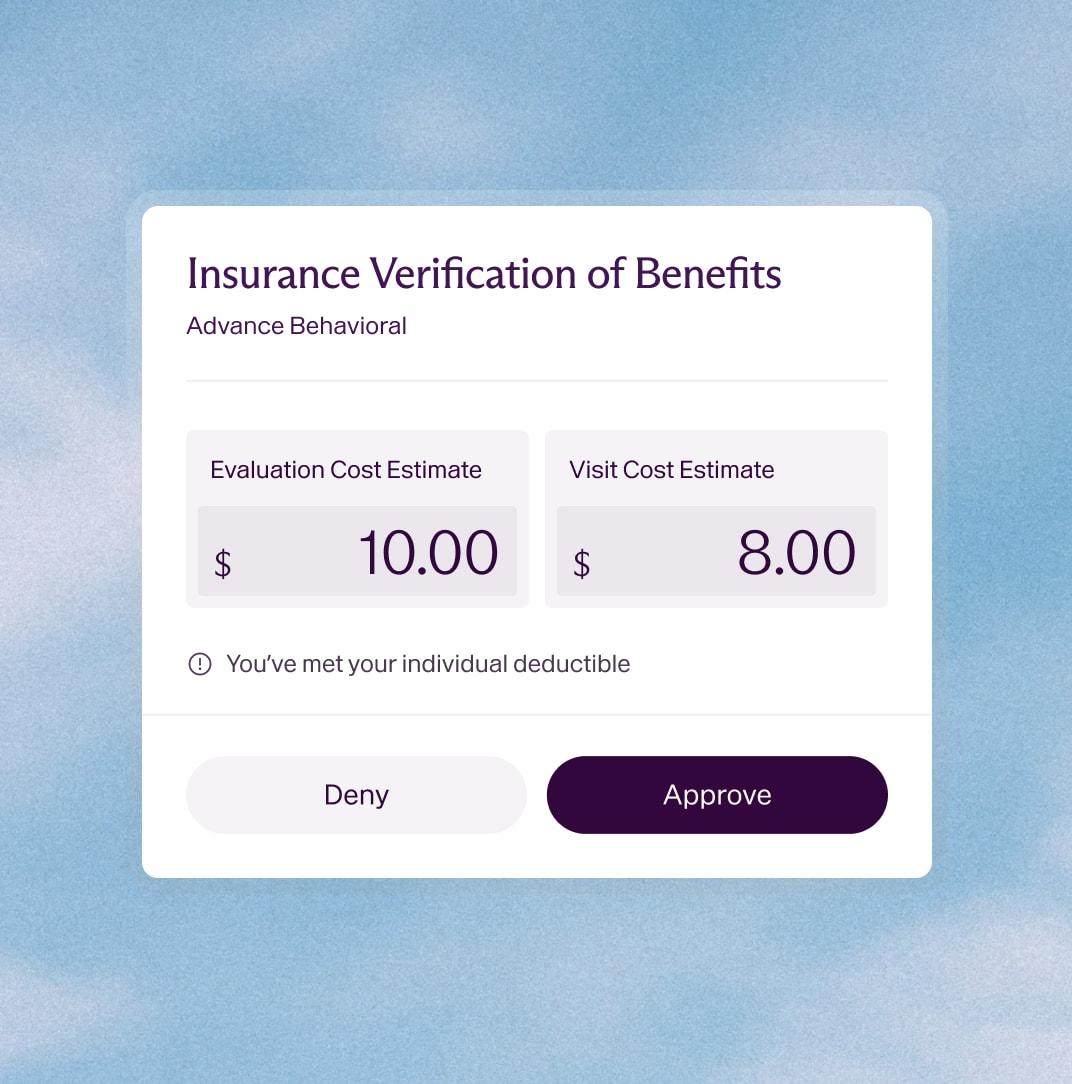
Verification of benefits for a patient
Re-verify every year
Benefits are re-verified annually by default, and again whenever your team asks.
clouds
G2 Logo
“We’re no longer finding out that a child’s coverage changed six weeks after the fact. We know before the session happens. That changes everything about how we operate, and what we can promise the families who count on us.”
Mellanie Page, EVP of Operations, ABS Kids
3812
2
0955
5
8570
0
K
Patients Served
3911
1
,
6790
0
5290
0
4070
0
+
Payors

Coverage checks that run before each visit

Benefit check
Before the first visit, each patient’s accumulations, referral rules, visit limits and exclusions are confirmed.
Additional plan detection
Silna detects a patient’s additional insurance automatically, along with any coverage change during treatment. Your team then confirms which plan pays first.
Monthly monitoring
Monitoring confirms each patient still has an active plan for continued services and detects any plan added.

Taking care of healthcare.

How coordination of benefits (COB) works

Step 1
Primary plan pays first
It pays its share under its own terms, as if the patient had no other health plan.
Step 2
Secondary plan pays next
It works out what it would have paid alone, then pays toward what the primary left unpaid.
Step 3
Patient owes the rest
Both plans together never pay more than the allowable expense, and the patient owes what remains.

Order of benefits for commercial plans

Own and dependent plans
The plan covering the patient as an employee, member or subscriber pays before a plan covering them as a dependent.
The birthday rule
For a child on both parents’ plans, the plan of the parent whose birthday comes first in the year pays first.
Active and retiree plans
A plan covering the patient as an active employee pays before a plan covering them as a retiree or laid-off employee.
COBRA and another plan
A plan covering the patient as an employee or retiree pays first, and COBRA pays second.
When no other rule decides
The plan that has covered the patient longer pays first, and the newer plan pays second.
No COB provision
A plan without a coordination of benefits provision always pays first, before other plans.

Source: NAIC Coordination of Benefits Model Regulation, section 6. Each state adopts its own version, and each plan’s contract states the rules it uses.

Medicare and Medicaid payment rules

Age 65+
Current employer plan
With 20 or more employees, the group plan pays first. With fewer than 20, Medicare pays first.
Disability
Large employer plan
With 100 or more employees, the group health plan pays first and Medicare pays second.
End-stage renal disease
First 30 months
The group health plan or COBRA pays first during the 30-month coordination period.
Retiree and COBRA
Retiree coverage or COBRA
Medicare pays first. Retiree coverage (age 65+) and COBRA (age or disability) pay second.
Accidents and injuries
No-fault and liability plans
No-fault, liability or workers’ compensation coverage pays first for related care, before Medicare.
Medicaid
Medicaid pays last
Every other liable plan, including Medicare, must pay before Medicaid pays.
clouds
“The amount of time they have saved us with eligibility and benefit checks has truly been a lifesaver for our agency.”
Becci H., Director of Operations (G2 review)
$
3148
8
6910
0
4710
0
M+
Yearly administrative cost of COB errors
CAQH, February 2014
$
4831
1
6145
5
5070
0
K
Unbillable services at ABS Kids, 2024
Read the case study

Key terms

Primary payor
The plan that pays a claim first, under its own terms, before any other plan the patient holds.
Secondary payor
The plan that pays after the primary, toward the allowable expense the primary left unpaid.
Allowable expense
A health care expense, including deductibles and copays, that at least one of the patient’s plans covers.
Birthday rule
For a child on both parents’ plans, the plan of the parent whose birthday comes first in the year pays first.
Medicare Secondary Payer
The federal rules that decide when another plan, such as an employer plan, pays before Medicare.
Conditional payment
A payment Medicare may make when the primary insurer hasn’t paid promptly, recovered once that insurer pays.

Frequently asked questions

What is coordination of benefits? Health insurance coordination of benefits (COB) is the set of rules that decides which plan pays first when a patient has two, and how much the secondary plan adds. The coordination of benefits meaning is the same for commercial plans, Medicare and Medicaid; only the rules for the order differ.

No. Silna helps with coordination of benefits by finding each patient’s additional plans before the first visit and checking coverage through treatment, but it doesn’t confirm coordination of benefits or the order the plans pay in. Your team confirms which plan is primary with the patient and each plan.

Take a visit with a $200 allowable expense. The primary plan pays $160 and leaves $40. Had the secondary plan been the only plan, it would have paid $150, but combined payments can’t exceed the allowable expense, so it pays the remaining $40 and the patient owes nothing. The amounts are only an example; each plan’s own terms set the real ones. For a billing team, coordination of benefits insurance rules decide which payor gets the claim first and what each one owes.

It is how two parents’ plans are ordered for their child. The parent whose birthday comes first in the calendar year has the primary plan, so a parent born on March 3 comes before one born on July 9, whatever their ages.

It can pay toward it. The allowable expense includes deductibles and copays, so a secondary plan can pay toward a deductible the primary plan left unpaid, up to what it would have paid on its own. It also credits its own deductible with what it would have credited without the other coverage.

At intake and again whenever coverage might change. Silna re-verifies eligibility monthly and benefits annually, and re-verifies benefits sooner at a customer’s request. For recurring hospital outpatient services, CMS requires Medicare Secondary Payer information to be verified every 90 days.

When a primary insurer leaves a claim unpaid for about 120 days, the provider can send it to Medicare. Medicare can pay conditionally and take the money back when the primary plan pays.

A provider paid by both Medicare and a primary payor for the same service must refund Medicare within 60 days of the duplicate payment, and interest is charged after that. CAQH estimated in February 2014 that ineffective coordination of benefits causes more than $800 million a year in administrative costs, and that providers alone could save about $480 million a year.

This page is general educational information and does not give legal or insurance advice. Coordination of benefits rules vary by plan and state, so confirm them with each plan before you rely on this page.

We care about better care. Silna automates patient clearance workflows to let teams get out of spreadsheets and get back to caregiving. Our AI-powered platform is backed by high-quality operators with years of healthcare experience.

Xx
Frame 1948760770
Frame 1948760766